Securing dependable HVAC Philadelphia service ensures indoor climate stability during sweltering July heatwaves along the Delaware River and sudden January sub-zero freezes across Philadelphia County. Maintaining residential heat pumps, gas furnaces, and hydronic radiators protects structural masonry and interior living spaces from severe seasonal temperature swings, excessive summer humidity, and indoor air stagnation.
No forms — call now for a fast, no-pressure quote.
📞 Call (267) 501-1805
HVAC in Philadelphia is the mechanical regulation of heating, ventilation, and air conditioning engineered to balance thermal comfort, indoor humidity, and air filtration across historic brick rowhomes, detached residences, and commercial facilities throughout the city.
Every service reflects the same meticulous attention to detail — whether it's a single job or a larger hvac project across Philadelphia.
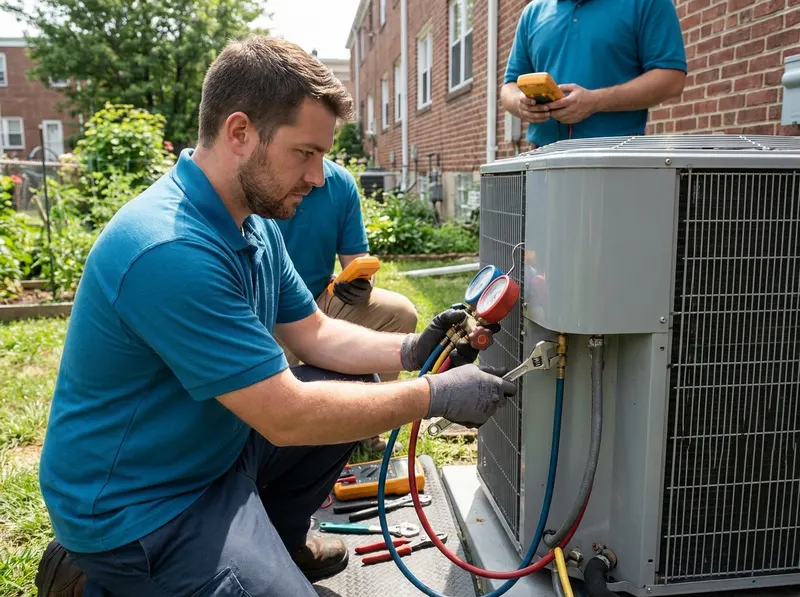
Emergency central air conditioning repair restores chilled airflow when outdoor condenser units malfunction during extreme urban heat island events. Experienced technicians execute targeted electrical testing, measure refrigerant superheat and subcooling levels to pinpoint leaks, replace degraded run capacitors, and clean choked condenser coils. Common failure points such as frozen evaporator coils, clogged condensate drain traps causing float switch shutdowns, and burnt contactor terminals receive rapid remediation to return household comfort quickly without unnecessary component replacements.
View details →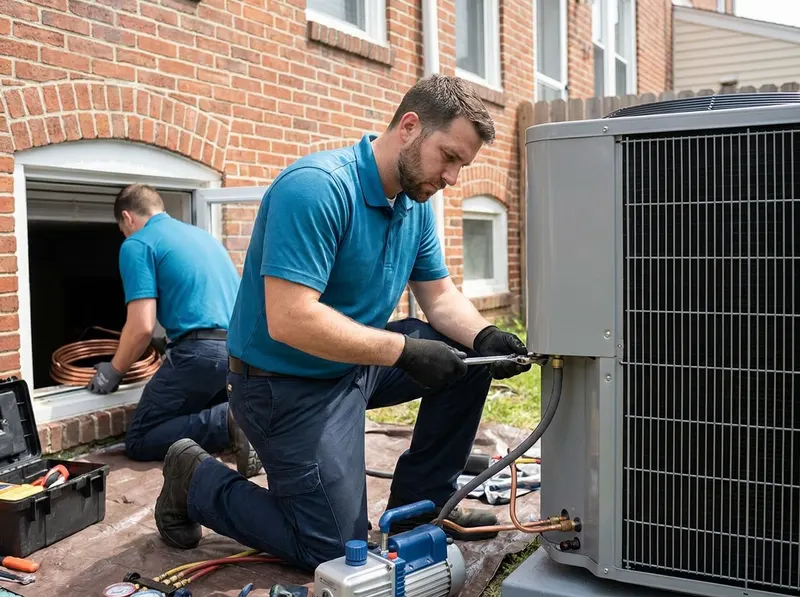
Installing an energy-efficient central air conditioning system requires precise Manual J heat load calculations to match equipment tonnage exactly to the building envelope, solar orientation, and window thermal resistance. Technicians evaluate existing supply and return sheet metal ductwork for static pressure restrictions, balance air volume across branch takeoffs, and install modern 14.3 to 18 SEER2 condensing units paired with matched indoor evaporator coils and thermal expansion valves for uniform cooling throughout multi-level floor plans.
View details →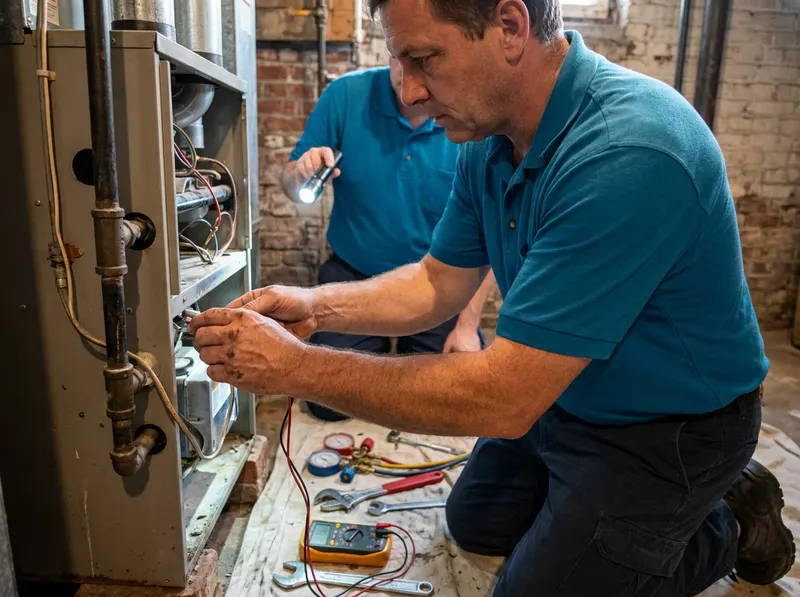
Residential gas furnace repair services resolve cold-air blowing conditions, intermittent burner lockouts, and unusual mechanical noises when cold snaps hit Philadelphia County. Service includes testing silicon nitride hot surface igniters, clearing mineral scale from flame sensor rods, testing high-limit switches, evaluating draft inducer motor draw, and examining primary and secondary heat exchangers with video inspection tools to verify absolute combustion integrity and carbon monoxide safety.
View details →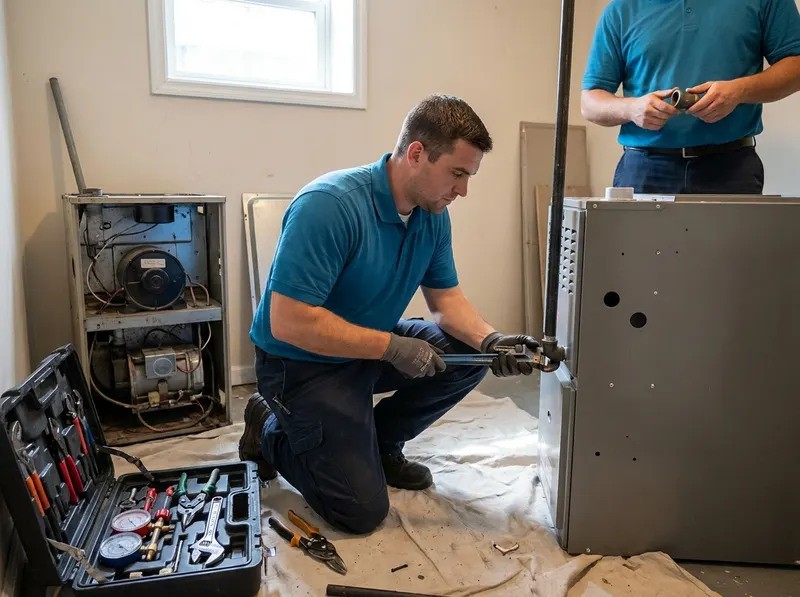
Upgrading an aging heating system with a high-efficiency 96%+ AFUE condensing gas furnace lowers winter heating expenditures while improving whole-home airflow. Modern installations feature two-stage or modulating gas valves and variable-speed ECM blower motors that gently circulate warmth without harsh temperature spikes. Upgrades include installing dedicated PVC direct-vent flue intake and exhaust piping through exterior walls, sealing return air drop boots, and integrating digital programmable controls.
View details →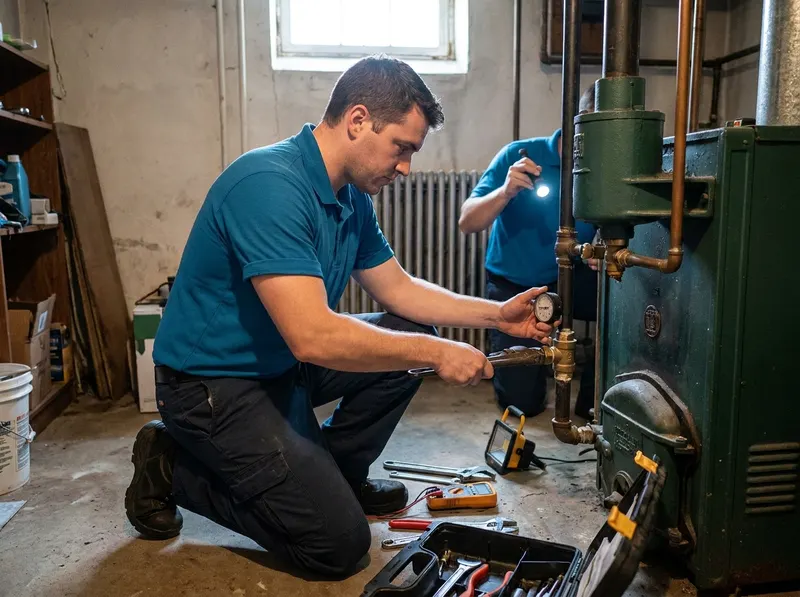
Hydronic heating systems in historic Philadelphia properties require precise mechanical calibration to maintain even water circulation and balanced thermal expansion. Boiler maintenance encompasses checking backflow preventers, testing automatic water feeders, verifying pressure relief valves, balancing zone valves, lubricating circulator pumps, and bleeding trapped air from cast-iron baseboards and standing radiators to eliminate cold zones, gurgling piping noises, and uneven heat distribution.
View details →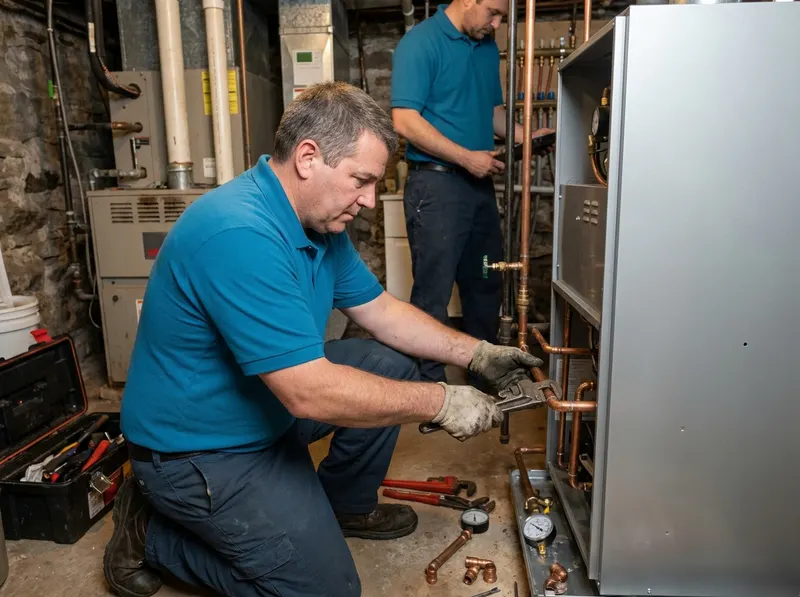
Replacing an obsolete cast-iron boiler with a wall-hung condensing hydronic boiler significantly reduces natural gas consumption while reclaiming valuable basement square footage. Modern hydronic installations incorporate outdoor reset sensors that adjust water supply temperatures based on exterior weather, hydraulic separators that balance primary and secondary flow loops, and multi-zone circulator switching relays for precise room-by-room heating control.
View details →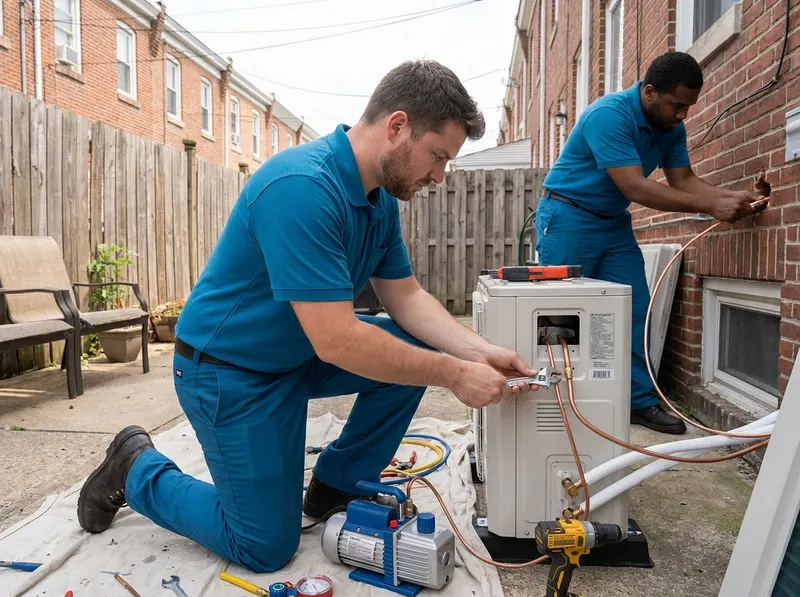
Multi-zone ductless mini-split heat pumps deliver targeted heating and cooling to multi-story rowhomes without requiring bulky ductwork or structural wall alterations. Inverter-driven outdoor condensers power multiple independent wall-mounted, floor-mounted, or ceiling-cassette indoor units. Each living space receives individualized temperature control, providing high energy efficiency, whisper-quiet operation, and dependable cooling across narrow urban footprints.
View details →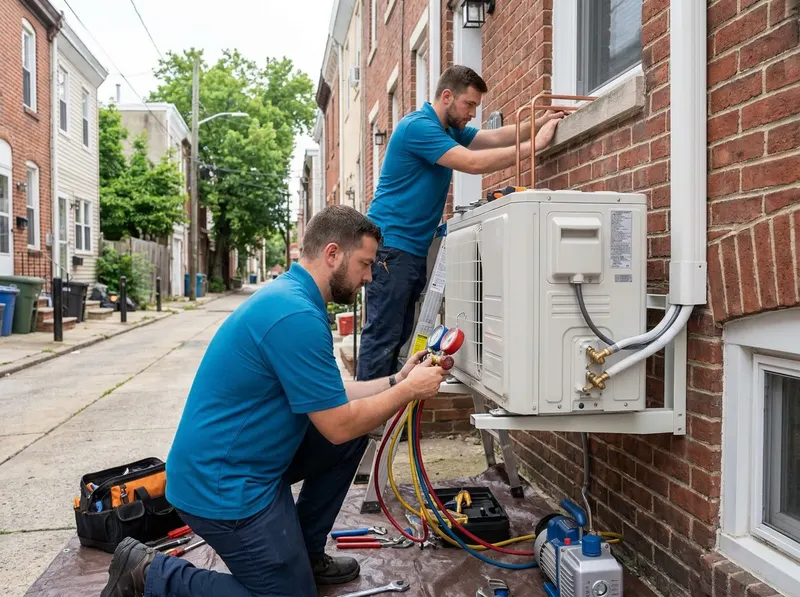
Ductless mini-split service restores heating and cooling output when indoor heads show error codes, condensate trays leak water down interior walls, or fan wheels accumulate urban dust. Technicians deep-clean indoor blower assemblies with specialized pressurized bib kits, clean secondary filters, inspect flare fittings using electronic halogen leak detectors, check communication wiring between heads and outdoor inverters, and verify thermistor resistance values.
View details →HVAC in Philadelphia is the mechanical regulation of heating, ventilation, and air conditioning engineered to balance thermal comfort, indoor humidity, and air filtration across historic brick rowhomes, detached residences, and commercial facilities throughout the city.
You get a firm, itemized quote for your hvac before any work begins — no surprises, no pressure.
Careful prep, tidy work, and a full cleanup when we are done. We treat your home and belongings like our own.
The same trusted, background-checked team from the first call to the final check.
Selecting the proper heating, ventilation, and air conditioning configuration in Philadelphia requires evaluating structural framework, electrical panel capacity, available duct pathways, and winter heating preferences. If your property is a traditional two- or three-story brick rowhome in Passyunk Square, Fishtown, or Northern Liberties that lacks ductwork, choose a multi-zone ductless mini-split heat pump system. Ductless configurations provide independent zone control on each floor, fit through tight stairwells and basement entries, eliminate the disruptive construction of dropping drywall soffits, and deliver exceptional electrical efficiency; the trade-off is a higher upfront equipment purchase cost and visible indoor evaporative head units mounted high on living space walls. If your residence is a detached single-family home in Mount Airy, Chestnut Hill, or Northeast Philadelphia with existing duct infrastructure, choose a high-efficiency variable-capacity central heat pump or a 96% AFUE two-stage gas furnace matched with a high-SEER central air conditioner. Central systems distribute conditioned air quietly through existing floor or ceiling registers and preserve your interior wall aesthetics; the trade-off is that unbalanced supply and return trunk lines in elongated floor plans can lead to noticeable temperature differentials between lower living levels and upper bedrooms during extreme weather peaks. If you occupy a historic brownstone or classic pre-war residence in Center City, Queen Village, or University City with an existing hydronic cast-iron radiator network, choose a high-efficiency condensing gas boiler replacement combined with independent ductless cooling zones. Hydronic heating preserves the comfortable, dust-free radiant warmth generated by cast-iron radiators without drying out indoor air during freezing winter months; the trade-off is that radiant piping cannot carry chilled air in the summer, requiring two distinct mechanical systems for year-round temperature regulation. If your commercial property or mixed-use retail building along commercial corridors requires high-volume air turnover, choose a packaged rooftop unit (RTU); the trade-off is requiring crane access and rigorous roof curb flashing to protect against heavy urban rain.
Every project gets a firm, written price after a free on-site visit. Ranges below for orientation.
Tell us about your hvac job and we'll send a clear, written quote — usually the same day. Or just call and talk to a real Philadelphia pro.
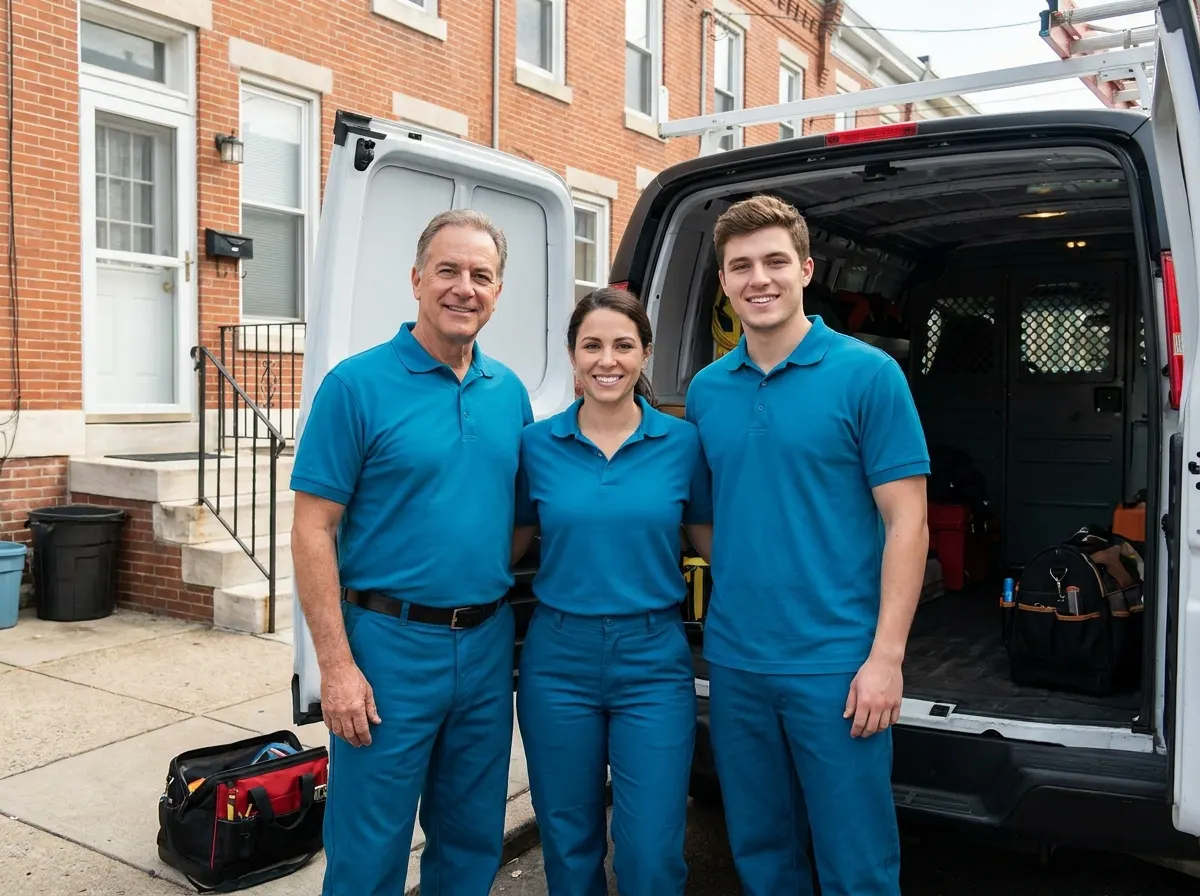
Philadelphia's dense architectural landscape presents specific climate control challenges rooted in its historic structural diversity. In historic two- and three-story solid brick rowhomes throughout Queen Village, Fishtown, and Passyunk Square, shared party walls provide lateral thermal buffering but lack hollow cavities for conventional supply ducts. The pronounced stack effect in these narrow buildings draws cool, damp air from unconditioned stone basements upward through central stairwells, trapping extreme heat on upper levels beneath uninsulated flat rubber roofs during humid July heatwaves along the Delaware and Schuylkill Rivers. Furthermore, navigating narrow residential access ways and steep, tight basement cellar doors near landmarks like Reading Terminal Market, Rittenhouse Square, and Independence National Historical Park requires specialized equipment transport methods and compact mechanical footprints. Heating systems must also account for older masonry chimneys, requiring proper flue lining to prevent acidic condensation from modern high-efficiency furnaces and boilers from degrading historic mortar.
 Fresh Air HVAC