Historic masonry homes across Queen Village, Passyunk Square, and Fishtown rely heavily on vintage cast-iron radiators that distribute balanced, radiant heat without drying out interior air. When freezing winter…
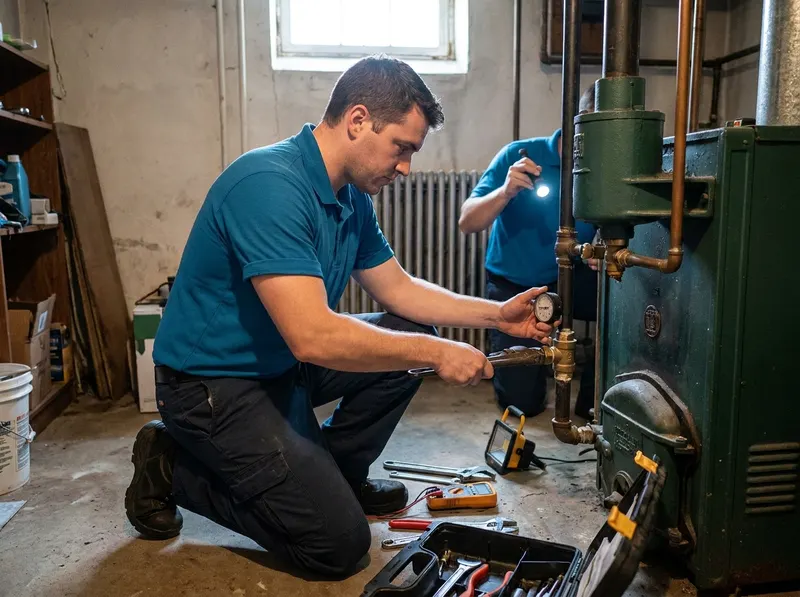
Historic masonry homes across Queen Village, Passyunk Square, and Fishtown rely heavily on vintage cast-iron radiators that distribute balanced, radiant heat without drying out interior air. When freezing winter temperatures arrive along the Delaware River corridor, hydronic systems can struggle with trapped air locks, failing thermocouple sensors, or seized bleed valves. Bleeding cold radiator sections, replacing water-logged expansion tanks, and calibrating pressure-reducing fill valves restore smooth heat circulation to upper-floor bedrooms without requiring intrusive ductwork installations.
Older three-story rowhomes in Center City and stone properties in Chestnut Hill often experience cold top floors while ground levels overheat. Repairing aging zone valves, flushing sludged piping, and replacing noisy mechanical circulator pumps balances system water pressure across every elevation. Choosing to maintain a hydronic cast-iron system preserves durable, quiet heating architecture that outlasts modern forced-air equipment, provided water chemistry and operational pressures remain properly regulated through annual servicing.
Technicians assess cast-iron radiator loops in tight rowhome basements with careful attention to existing pipe clearances and venting safety. You receive transparent explanations of system faults—such as leaking spud unions, failing backflow preventers, or worn aquastat switches—so you can make informed maintenance decisions without high-pressure sales tactics.
Every job gets a firm, written price after a free on-site visit.
Tell us about your hydronic boiler and cast-iron radiator service job in Philadelphia and we'll send a clear, written quote — usually the same day.
 Fresh Air HVAC